
"Tanzania coffee types"
900 article(s) found

Introduction to the characteristics of Kilimanjaro Coffee Flavor Manor with excellent taste
The official capital of Tanzania is Dodoma, located at the eastern end of the southern highlands, 1115 meters above sea level and 400km from Dar es Salaam. It is a transportation center city with a population of 300000. Due to geographical location as well as economic and political reasons, people outside Tanzania believe that Dar es Salaam is the capital of Tanzania. In fact, Dar es Salaam is not Tansan.

The authentic Arusha Coffee Estate in Tanzania Flavor Description Taste Introduction
Rainfall types are divided into bimodal distribution and unimodal distribution. The areas with bi-modal rainfall distribution include the provinces around Lake Victoria Basin, the northeast highlands, the coast and the northeast inland. The bi-modal rainfall distribution area is characterized by two long and short rainy seasons. The short rainy season occurs from September to December, and the total rainfall can reach 200-500 mm. The long rainy season occurs from March to May.

Introduction to the description of the characteristics and flavor of Tanzanian coffee
The eastern coastal areas and inland lowlands of Tanzania have a savanna climate, while the western inland plateau has a tropical mountain climate, with an average temperature of 21-25 ℃ in most areas. More than 20 islands in Zanzibar have a tropical maritime climate, hot and humid all the year round, with an annual average temperature of 26 ℃. [6] rainfall types can be divided into bimodal distribution and unimodal distribution. Areas with double bee distribution of rainfall include

Introduction to the characteristics of Tanzania Kilimanjaro Coffee Flavor Manor
The topography of Tanzania is high in the northwest and low in the southeast, showing a ladder shape. The eastern coast is a lowland, the western inland plateau accounts for more than half of the total inland area, and the East African Rift Valley runs from east to west from Lake Malawi to the north and south. The Kibo peak of Mount Kilimanjaro in the northeast is 5895 meters above sea level. It is the highest peak climate in Africa, Tanzania Beach, Tanzania Beach, Tanzania East Coast.

Tanzania Coffee Bean Roast Degree Introduction
1, coffee roast coffee taste because of coffee bean type, grinding method, roast degree, quality and difference. The type of beans is essential, but the method of grinding and the degree of roasting are subjective artifacts. Basically, coffee is made through a process of harvest selection, roasting, grinding and extraction, but the roasting technique is the most important to control the coffee flavor.

Coffee flavor and taste of Kilimanjaro, Tanzania introduce Arusha Coffee Manor
Bubble type: put the coffee powder into the pot, soak it in hot water for several minutes, and then filter out the coffee grounds by a filter cloth or screen to form a cup of coffee liquid. Siphon pots, drip pots, Belgian coffee pots and Vietnamese coffee pots are all follicular brewing tools, and they all have a soaking process to form a more complex taste. High-pressure type: using pressurized hot water to penetrate and fill compacted

Introduction to the characteristics of Kilimanjaro Coffee Flavor Manor in Tanzania
The types of rainfall can be divided into bimodal distribution and unimodal distribution. The areas with double bee rainfall include the provinces around the Lake Victoria basin, the northeast highlands, the coastal and inland northeastern. The bimodal rainfall area is characterized by two rainy seasons. The short rainy season occurs from September to December. The total rainfall can reach 200-500 mm. The long rainy season occurs from March to May.

Tanzania Arusha Coffee Estate Flavor Description Processing Characteristics Variety Taste Introduction
In early 2010, there was a new movement towards political reconciliation on Sang Island, with the Revolutionary Party and RUF agreeing on the formation of a Unity Government on Sang Island. In July of the same year, the referendum in Sang passed a resolution on the establishment of a national unity government system. In November, the general election in Sang was successfully held. The national unity government was established on Sang Island. Sang President, Second Vice President and 11 ministers came from the Revolutionary Party. Sang First Vice President and 8.

A brief introduction to the flavor and aroma characteristics of Kilimanjaro coffee beans with light sour taste
Kilimanjaro coffee is a uniform size of large coffee beans, the color is gray-green, compared with a strong sour and sweet flavor, excellent flavor. Medium baking will give off sweetness and light sour taste, deep baking will produce soft bitterness, suitable for blending. Brewing method editor Kilimanjaro coffee is mainly suitable for blending and mixing, you can mix it yourself.

Variety of Full-Granulated Tanzanian Coffee Beans Treatment Flavor Description Estate Profile
Rainfall types are divided into bimodal distribution and unimodal distribution. The areas with bi-modal rainfall distribution include the provinces around Lake Victoria Basin, the northeast highlands, the coast and the northeast inland. The bi-modal rainfall distribution area is characterized by two long and short rainy seasons. The short rainy season occurs from September to December, and the total rainfall can reach 200-500 mm. The long rainy season occurs from March to May.

Cultivation of boutique coffee beans in Kilimanjaro, Tanzania A brief introduction to geographical location, climate and altitude
Flavor: full-bodied and refreshing, acidity lower than Kenyan coffee, pure flavor, aroma overflowing suggested baking method: medium roasted ★★: good market for Tanzanian coffee: coffee export from Tanzania (Tanzania) occupies an important position in the whole national economy. In the past, the coffee industry in Tanzania has been dominated by manor cultivation, but now more than 85% are by small farmers

Introduction of coffee producing countries in Tanzania and Africa
Tanzania Coffee Coffee growing area: African Coffee Coffee: medium concentration Coffee description: refreshing acidity and medium mellow complement blackcurrant and sweet orange flavors processing method: washing with flavors: blackcurrant, orange and lemon similar coffee: Kenya coffee Tanzania coffee from the rich soil of the East African Rift Valley, is a high-quality coffee from this region

Introduction to the characteristics of the Fine Coffee Flavor of Kilimanjaro in Tanzania
The eastern coastal areas and inland lowlands of Tanzania have a savanna climate, while the western inland plateau has a tropical mountain climate, with an average temperature of 21-25 ℃ in most areas. More than 20 islands in Zanzibar have a tropical maritime climate, hot and humid all the year round, with an annual average temperature of 26 ℃. [6] rainfall types can be divided into bimodal distribution and unimodal distribution. Areas with double bee distribution of rainfall include

Introduction of Tanzania Kilimanjaro Coffee, which is rich in volcanic soil
Tanzania's main coffee producing area, located at the foot of Mount Kilimanjaro, is rich in volcanic soil. Some coffee trees planted here are more than 100 years old. Coffee was first introduced by Christians from Kenya to grow coffee. Coffee trees must be carefully taken care of, weeded and fertilized. And old branches must be cut off so that new branches can grow to maintain the quality of coffee beans.

Tanzanian coffee
Tanzania Coffee Coffee growing area: African Coffee Coffee: medium concentration Coffee description: refreshing acidity and medium mellow complement blackcurrant and sweet orange flavors processing method: washing with flavors: blackcurrant, orange and lemon similar coffee: Kenya coffee Tanzania coffee from the rich soil of the East African Rift Valley, is a high-quality coffee from this region
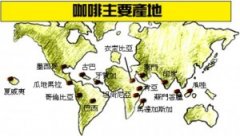
Europeans nicknamed Tanzanian coffee "coffee gentleman"
Tanzania Coffee Tanzania Coffee Coffee growing area: African Coffee Coffee: medium concentration Coffee description: refreshing acidity and medium mellow complement blackcurrant and mandarin orange flavors processing method: washing method: blackcurrant, orange and lemon-like coffee: Kenya Coffee Tanzania Coffee comes from the soil-rich East African Rift Valley
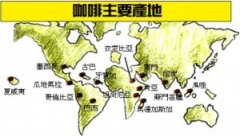
Alias for Tanzanian coffee "coffee gentleman"
Tanzania Coffee Tanzania Coffee Coffee growing area: African Coffee Coffee: medium concentration Coffee description: refreshing acidity and medium mellow complement blackcurrant and mandarin orange flavors processing method: washing method: blackcurrant, orange and lemon-like coffee: Kenya Coffee Tanzania Coffee comes from the soil-rich East African Rift Valley
Boutique single coffee Tanzanian coffee
Tanzania Coffee Tanzania Coffee Coffee growing area: African Coffee Coffee: medium concentration Coffee description: refreshing acidity and medium mellow complement blackcurrant and mandarin orange flavors processing method: washing method: blackcurrant, orange and lemon-like coffee: Kenya Coffee Tanzania Coffee comes from the soil-rich East African Rift Valley

Introduction to the characteristics of high-quality coffee beans with flavor and taste in Tanzania coffee producing areas
Tanzania covers an area of 945087 square kilometers, of which Zanzibar is 2657 square kilometers. It consists of the mainland, Zanzibar and more than 20 small islands. Located in eastern Africa and south of the equator, the continent is bounded by the Indian Ocean to the east, Zambia, Malawi and Mozambique to the south, Rwanda, Burundi and the Democratic Republic of the Congo to the west, and Kenya and Uganda to the north. The coastline of the mainland is 840 km long.

Strong flavor and aroma of Kilimanjaro coffee in the highlands of northern Tanzania
Tanzania's main coffee producing area, located at the foot of Mount Kilimanjaro, is rich in volcanic soil. Some coffee trees planted here are more than 100 years old. Coffee was first introduced by Christians from Kenya to grow coffee. Coffee trees must be carefully taken care of, weeded and fertilized. And old branches must be cut off so that new branches can grow to maintain the quality of coffee beans.